

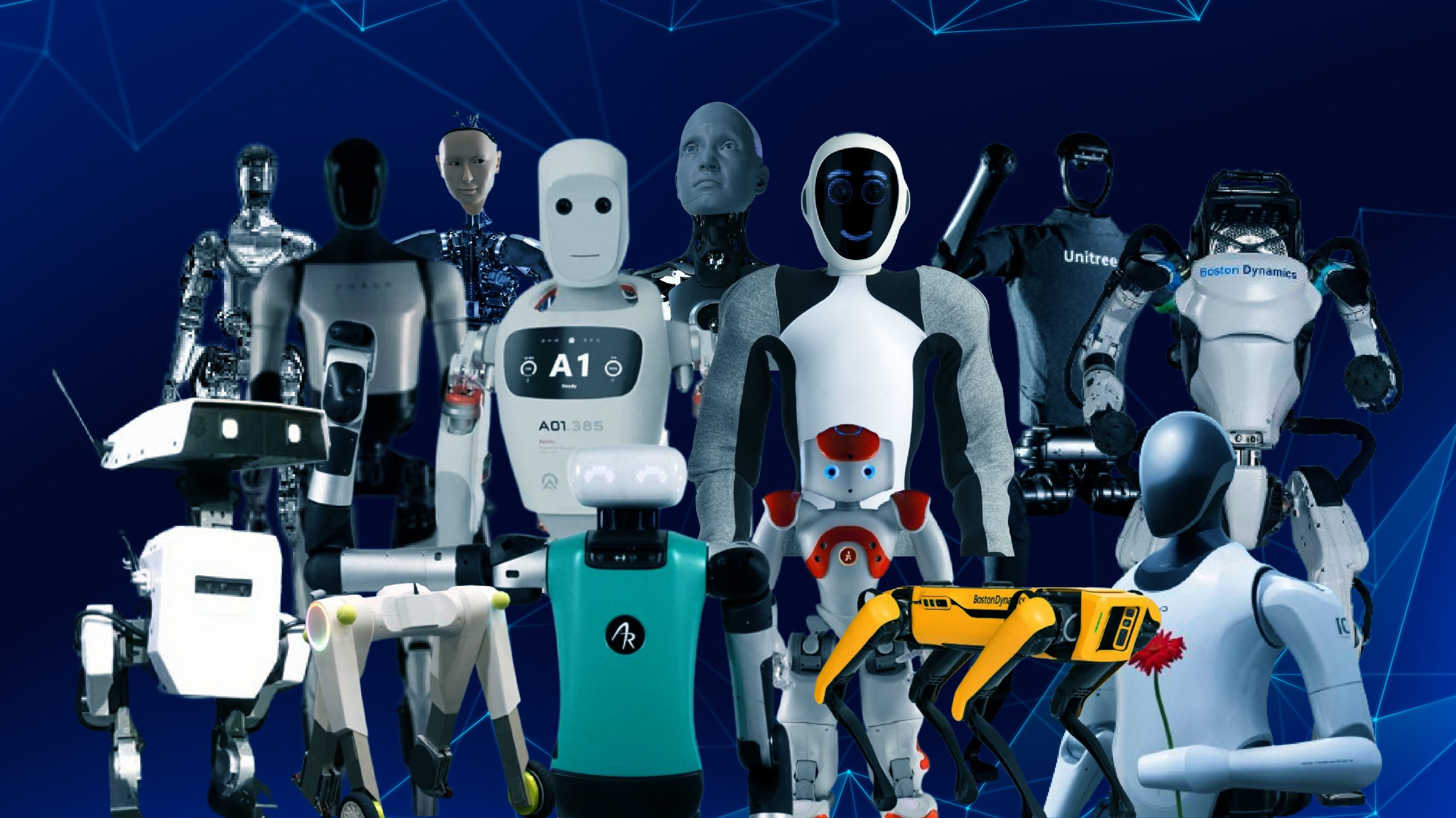

The Global Robotics Sprint: A Master Feature Blueprint
The ongoing geopolitical shift from abstract software to physical manifestation marks a major transition in global economics. The global “Robotics Race” is no longer a localized lab experiment; it is an aggressive, high-stakes platform war. By grounding this narrative in the precise production milestones, technological breakthroughs, and industrial pilots defining the sector, this master feature outlines the engineering, economic, and geopolitical realities of this transition.
The 2026 Paradigm Shift: From Custom Code to Physical AI
For decades, robotics engineering operated under a rigid constraint: every trajectory, collision-avoidance boundary, and end-effector manipulation had to be mathematically mapped or explicitly programmed.
The industry has officially shattered this bottleneck. The modern robotics sector is defined by the commercialization of Physical AI and Vision-Language-Action (VLA) models. Instead of hardcoding edge cases, engineers deploy multimodal neural networks that process sensory pixels directly into physical actions.
By utilizing highly sophisticated synthetic physics engines, robots now undergo millions of hours of accelerated reinforcement learning in digital twin environments before their code ever touches real-world actuators. This software revolution has transformed humanoids from isolated automation cells into adaptive, general-purpose platforms capable of operating dynamically alongside human workforces.
[Traditional Robotics] ───> Hardcoded Rules ───> Multi-Year Development ───> Single-Task Rigid Execution
[Modern Physical AI]   ───> VLA Model + Simulation ───> Rapid Adaptation ───> Multi-Task Dynamic Execution
The Geopolitical Leaderboard: Core Strategic Focus Areas
The race for robotic supremacy has evolved into a strategic priority for the world’s leading industrial economies. Each major power is leveraging its native macroeconomic strengths to capture a distinct segment of the emerging automation value chain.
| Nation | Core Strategic Edge | Major Operational Milestones |
| United States | Advanced AI foundation models, deep venture capital ecosystems, and agile software integration. | Large-scale integration of humanoid fleets into commercial fulfillment centers; deployment of home-operating software platforms. |
| China | Unrivaled manufacturing supply chain scale, vertical component integration, and rapid hardware iteration. | Scaled mass production of commercial embodied units, establishing highly standardized component ecosystems. |
| Japan | Elite precision engineering, advanced harmonic drives, and dominant legacy industrial electronics. | Deep deployment of commercial service automation and humanoid integration to combat severe domestic demographic labor deficits. |
| Germany | Deep automotive expertise, operational technology (OT) maturity, and complex systems engineering. | High-voltage electric vehicle (EV) battery assembly line integration and automated heavy industrial orchestration. |
How Humanoid Intelligence is Redefining Heavy Industry
The practical application of these platforms is actively restructuring the floor mechanics of manufacturing, global logistics, and heavy assembly.
1. Automotive & Factory Floor Orchestration
Automotive manufacturing has become the primary testing ground for full-scale humanoid deployment. Rather than replacing entire assembly lines, humanoids are seamlessly filling highly repetitive, ergonomically taxing operational gaps.
- Tesla (Optimus Platform): Moving aggressively to scale internal deployment, Tesla has integrated over 1,000 of its production-optimized Optimus units directly into the live assembly lines at its Fremont, California facility. Operating across battery cell sorting, parts handling, and component transportation, this deployment represents a massive real-world data collection flywheel, helping to rapidly reduce production costs toward long-term targets.
- BMW Group & Figure AI: Following highly successful field trials at its Spartanburg, South Carolina assembly facility—where the Figure 02 model assisted in the production of over 30,000 vehicles by handling intricate sheet-metal insertion—BMW has initiated deployment of the advanced Figure 03 platform. Operating on the Helix 02 VLA framework, these humanoids execute complex sequencing applications in logistics, pulling heavy carts and sorting unsorted parts containers in real time.
[Unsorted Materials Container] ──> [Figure 03 / Helix 02 Model] ──> [Precision Sequencing Trolley] ──> [Just-in-Sequence Assembly Line]
- Mass Production Scaling (AgiBot): Demonstrating the immense capacity of the East Asian supply chain, Shanghai-based AgiBot officially surpassed the 15,000-unit mass production milestone for its general-purpose embodied robots, driven by a highly standardized supply chain capable of high-volume annual manufacturing outputs.
2. The Logistics & Retail Pipeline
In fulfillment operations, platforms like Agility Robotics’ Digit are running continuous multi-hour shifts alongside human operators. By taking over tasks such as automated tote manipulation and bulk material moving, these systems alleviate the structural bottleneck of warehouse turnover.
The “Task-Replacer” Economics
A foundational concept for any modern economic analysis of this sector is the Task-Replacer Reality. A common public misconception is that humanoid platforms will immediately eliminate entire human job roles. In practice, the economics dictate a highly complementary model.
[Average Warehouse Human Workload]
 ├── 20% High-Turnover, Repetitive Material Toting ──> [Automated by Humanoid Fleet]
 └── 80% Cognitive Exception Handling, Fleet Oversight ──> [Retained/Elevated Human Worker]
By automating the bottom 20% of high-injury, physically exhausting tasks, corporations reduce workplace injuries and stabilize operational throughput. The human worker’s role is simultaneously elevated into that of a fleet supervisor, diagnostic specialist, or spatial coordinator—managing a small army of autonomous platforms via high-level software interfaces.
The Educational and Economic Imperative
Because this industrial pivot is unfolding at such a rapid velocity, the global demand for engineering talent specializing in embodied intelligence has reached an all-time high. The boundaries between classic mechanical engineering, electrical systems, and pure computer science have permanently dissolved.
This shift has created several dominant, high-growth career tracks within the global economy:
- Human-Robot Interaction (HRI): Designing the cognitive interfaces, safety protocols, and natural language communication channels that allow humans and active humanoids to safely share tight physical spaces.
- Mechatronics & Actuator Engineering: Developing high-torque density motors, lightweight structural materials, and next-generation tactile sensors capable of mimicking human physical dexterity.
- Robotics Data Engineering: Managing the massive synthetic data training pipelines and curation of real-world physical teleoperation logs required to continuously update VLA foundation models.
Universities worldwide are completely restructuring their STEM curriculums to meet this demand. The ambition of the next generation of engineers has fundamentally shifted: the ultimate technological achievement is no longer just writing software for a screen, but building the intelligent, physical machines that will rebuild our cities, manage our supply chains, and explore distant worlds.