

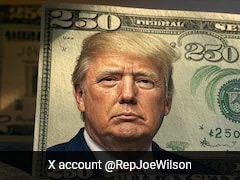
A Hypothetical Symbol of Legacy and Economics

The Bizarre History Behind the 1866 Law
The “Thayer Amendment” mentioned in the text wasn’t born out of high-minded philosophical debates about democracy—it was sparked by pure petty vanity.
During the Civil War, citizens hoarded silver and gold coins. To keep daily commerce moving, the U.S. Treasury issued “fractional currency”—small paper notes worth 3, 5, 10, 25, and 50 cents. In 1866, Congress requested that a new 5-cent note feature the explorer William Clark (of the famous Lewis and Clark expedition).
However, the directive only specified the last name: “Clark.”
[Congress Requests] ──> "Put Clark on the 5¢ Note" (Meaning Explorer William Clark)
                                       │
                                       ▼
[Treasury Bureaucracy] ──> Spencer M. Clark prints his OWN face on the currency!
Spencer M. Clark, the Superintendent of the National Currency Bureau, seized the ambiguity and printed his own face on the money. Congress was furious—Clark was already embroiled in structural scandals—and Representative Russell Thayer immediately introduced an amendment declaring that no living person could ever be depicted on U.S. federal securities or currency.
The Legal Reality of Changing U.S. Currency
While the Treasury Department has prepared conceptual mockups for a commemorative $250 bill, the Executive Branch has no unilateral authority to print it. The modern rules governing our wallets require a literal act of Congress to override long-standing statutory design laws.
The Two Pathways to Changing a Bill
| Metric | Modifying an Existing Denomination ($1 – $100) | Creating a Brand-New Denomination (e.g., $250) |
| Authority | Treasury Secretary & Advanced Anti-Counterfeiting Committees | Stricly Congress |
| Legal Barrier | None, but must adhere to 31 U.S.C. § 5114(b) (Deceased individuals only) | Requires passing a brand-new statutory exception to the 1866 law. |
| Primary Focus | Security features, tactile elements, and fraud prevention | Commemoration, political consensus, and economic utility. |
Where the Debate Stands Now
The introduction of the Donald J. Trump $250 Bill Act (H.R. 1761) by Rep. Joe Wilson has brought this structural friction to a head.
- The Pro-Bill Argument: Proponents view it as a unique, high-value numismatic collector’s piece designed specifically for the U.S. Semiquincentennial (250th anniversary). They argue it honors a president who championed deregulation and economic populism during a significant era of modern American history.
- The Anti-Bill Argument: Opponents argue that placing a living, active political figure on legal tender shatters a 160-year tradition of waiting until a leader’s full historical legacy can be measured posthumously. There are also functional arguments pointing out that introducing a $250 bill runs counter to a global economy transitioning rapidly toward digital transactions and cashless infrastructure.
Ultimately, the face on a banknote acts as a mirror of national consensus. Whether this bill ever sees a printing press or remains a conceptual footnote, it highlights just how deeply Americans care about the symbols that represent them.
The potential introduction of a $250 bill serves as a fascinating lens through which to view the evolution of the American identity, especially as the nation nears its 250th anniversary in 2026. This legislative effort underscores a profound tension between historical custom and modern political signaling. For nearly two centuries, the U.S. currency has functioned as a “hall of fame” for the departed; the 1866 Thayer Amendment, initially a tool for social engineering and bureaucratic discipline, solidified a cultural norm that separates the currency from the volatility of contemporary political life. By mandating that only those who have passed into history can be memorialized on federal tender, the government essentially protected the sanctity of the dollar from becoming a partisan trophy.
When a proposal like H.R. 1761 surfaces, it isn’t just a discussion about denominations; it is a challenge to this institutional restraint. Critics of the bill often cite the potential for “monetary polarization,” fearing that if the currency is used to validate the legacies of living political leaders, it could alienate vast swaths of the population and diminish the unifying function of the dollar. In an era already characterized by heightened political tribalism, the act of selecting a face for currency carries immense weight. The debate, therefore, forces Americans to confront whether they want their money to represent a shared, settled history or an ongoing, active political agenda.
Beyond the political theater, the proposal also invites a critique of the U.S. monetary system’s rigidity in the digital age. Most advanced economies have been moving toward higher-denomination bills or, conversely, retiring them in favor of digital assets and mobile payments. Introducing a $250 bill—a non-standard, awkward denomination in a base-ten system—strikes many economists as a step backward in terms of utility. If the goal is commemoration, opponents argue that a commemorative coin or a specialized medal would suffice without the legal and practical complications of altering the federal banknote structure.
Ultimately, the bill’s progress—or lack thereof—is a litmus test for the American legislative process. It tests whether the government can navigate the pressures of modern populism while maintaining the dignity of long-standing fiscal traditions. As the Second Circuit Court of Appeals and other institutions continue to navigate their own respective boundaries of law and precedent, this currency debate serves as a parallel reminder that every major American institution, from the judiciary to the Treasury, is constantly negotiating the line between past tradition and future intent. Whether the $250 bill eventually enters circulation or joins the dustbin of failed legislative proposals, the mere act of introducing it has already succeeded in doing what currency is meant to do: it has sparked a massive, nationwide conversation about what, and whom, we value as a society.