

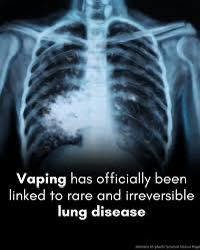
Here are The Facts

Clear Air, Clear Facts: The Real Science of Vaping and Lung Health
The rapid rise of electronic cigarettes and personal vaporizers since the early 2010s transformed the global landscape of nicotine consumption. Promoted heavily as a modern, texturally seamless, and fundamentally safer alternative to traditional tobacco smoking, these devices rapidly captured the interest of teenagers, college students, and young adults.
However, as longitudinal clinical research and public health surveillance have expanded, the medical community has developed a much clearer understanding of how e-cigarette aerosols interact with human respiratory tissue.
Separating Fact from Fiction: The “Popcorn Lung” Connection
When discussing the long-term pulmonary risks of vaping, the term “popcorn lung”—medically known as bronchiolitis obliterans—frequently centers the conversation. To build a completely accurate, evidence-based understanding of this issue, it is vital to distinguish between documented industrial chemical exposure and ongoing clinical vaping research.
Industrial Diacetyl Exposure (2000s) ──> Inhalation of Concentrated Vapors ──> Bronchiolitis Obliterans Established
                                                                                         │
Modern Vaping Aerosols (2020s) ───────> Chemical Exposure & Severe Inflammation ─────────> Under Active Clinical Study
The Origins of the Condition
The colloquial name “popcorn lung” stems from a distinct industrial health crisis in the early 2000s. Workers at a microwave popcorn packaging plant developed severe, irreversible airway scarring after inhaling massive, highly concentrated quantities of diacetyl—a volatile organic compound used to create artificial buttery flavoring. When inhaled directly into the lungs in high concentrations, diacetyl causes intense localized inflammation, leading to permanent fibrotic scarring of the bronchioles (the smallest airways in the respiratory system).
The Vaping Link: What the Data Shows
Early independent laboratory testing on first-generation e-liquids—particularly sweet, dessert, or creamy flavors—revealed that many formulas contained diacetyl or chemically similar flavoring substitutes like acetoin and 2,3-pentanedione. This discovery triggered widespread concern that regular vaping could replicate the exact biological conditions that harmed the factory workers.
However, according to major public health entities like Cancer Research UK and the U.S. Centers for Disease Control and Prevention (CDC), there are no broadly confirmed, epidemiologically definitive cases of bronchiolitis obliterans directly caused by commercial nicotine vaping.
Furthermore, many global regulatory frameworks have taken proactive steps to eliminate this risk. For instance, the United Kingdom banned diacetyl as an ingredient in legal e-cigarettes and e-liquids under the Tobacco Products Directive (TPD) in 2016. While isolated case reports have detailed severe, atypical bronchiolitis presentations in young patients with heavy vaping habits, establishing a universal causal link remains a primary focus of active clinical research.
The Proven Pulmonary Risk: Understanding EVALI
While a definitive link to popcorn lung remains unproven, medical science has firmly established that vaping is far from a harmless baseline of flavored water vapor. The true, documented crisis concerning acute vaping-related lung damage is known as EVALI (E-cigarette or Vaping Product Use-Associated Lung Injury).
First identified during a major public health surge in 2019, EVALI is a severe, potentially fatal respiratory condition characterized by widespread inflammation, cellular apoptosis (cell death), and the accumulation of lipid-laden macrophages (immune cells filled with fat droplets) deep within the alveoli.
E-Cigarette Aerosol Inhalation ──> Epithelial Tissue Irritation ──> Widespread Acute Cellular Inflammation (EVALI)
Epidemiological investigations traced the vast majority of acute EVALI cases to illicit or informal vaping cartridges containing vitamin E acetate—a viscous thickening agent frequently mixed into tetrahydrocannabinol (THC) oils. When heated by a vaporizer coil and inhaled, vitamin E acetate alters the lung’s natural surfactant layer, inducing rapid, severe respiratory distress.
Physical Symptoms and Chemical Realities
Even in the absence of acute injuries like EVALI, regular inhalation of heated chemical aerosols places a continuous physiological burden on the respiratory tract. E-cigarette vapor exposes the delicate lining of the lungs to ultra-fine particulates, volatile organic compounds, and heavy metals.
| Chemical Component | Origin Within the Device | Proven Physiological Impact |
| Formaldehyde & Acetaldehyde | Thermal degradation of Propylene Glycol/Vegetable Glycerin | Known carcinogens that cause chronic epithelial irritation and tissue inflammation. |
| Nickel, Tin, & Lead | Microscopic degradation of the internal heating coils | Heavy metal particulates that deposit deep in lung tissue, increasing the long-term risk of chronic bronchitis. |
| Ultrafine Particulates | Aerosolization of flavorings and base liquids | Penetrate the blood-air barrier, triggering systemic oxidative stress and cardiovascular strain. |
Primary Symptoms to Monitor
Individuals who vape regularly should remain highly vigilant regarding their respiratory health. If any of the following symptoms present persistently, it is essential to seek evaluation from a qualified healthcare professional:
- Persistent Dry Coughing: A chronic cough that fails to resolve with standard over-the-counter remedies or time.
- Exertional Dyspnea: Uncharacteristic shortness of breath, wheezing, or chest tightness during basic physical tasks like climbing stairs.
- Unexplained Fatigue: Deep physical exhaustion paired with consistent, localized upper-respiratory irritation or low-grade chest discomfort.
Mitigating Damage and Navigating Cessation
Because pulmonary tissue varies in its capacity to regenerate depending on the depth and nature of the injury, stopping the ongoing introduction of chemical irritants is the single most vital step to protect long-term lung function. While dense fibrotic scarring cannot be reversed, the acute inflammatory responses triggered by chemical aerosols can subside significantly once exposure ceases.
To support general respiratory recovery and overall health, medical experts emphasize several foundational lifestyle practices:
- Eliminate Secondary Exposure: Avoid indoor environments with heavy secondhand smoke or vape aerosols to give lung tissue an optimal environment to heal.
- Optimize Air Quality: Utilize high-efficiency particulate air (HEPA) filtration systems in home living spaces to minimize baseline dust and particulate irritation.
- Maintain Hydration: Drinking adequate water helps support the natural mucosal lining of the respiratory tract, aiding the clearance of microscopic debris.
For individuals seeking to overcome a nicotine or vaping dependency, structured behavioral support significantly increases the probability of long-term success.
Verified Cessation Support Resources
- SmokeFree.gov: An official government portal providing comprehensive, evidence-based tools, customized quit plans, and text-based support programs tailored for both adults and teens.
- The National Quitline (1-800-QUIT-NOW): A free, telephone-based service connecting callers directly to local counselors who provide confidential coaching, behavioral strategies, and information on nicotine replacement options.