

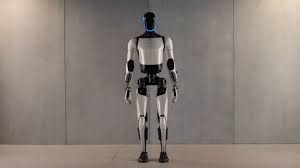
Elon Musk’s Tesla Optimus: The Reality Behind the $20,000 Humanoid Robot

When Tesla and SpaceX CEO Elon Musk first introduced the concept of a humanoid robot at Tesla’s AI Day, critics widely dismissed it as a marketing stunt featuring a performer in a spandex suit. Fast forward to the present day, and the Tesla Optimus program has evolved into one of the most aggressively watched developments in the entire tech world. As artificial intelligence transitions from digital screens into the physical world—a field known as Physical AI—humanoid robotics is poised to become the next multi-trillion-dollar industry.
Musk has boldly claimed that Optimus will eventually drive the majority of Tesla’s long-term value, with a target retail price falling between $20,000 and $30,000. However, separating forward-looking corporate optimism from immediate engineering and financial reality requires a deep dive into the supply chain, the underlying artificial intelligence, and the highly competitive global landscape.
The Economics of the $20,000 Price Target: Myth vs. Scaled Reality
The headline that consistently captures global attention is the projected $20,000 to $30,000 price tag. To the average consumer, this sounds revolutionary—positioning a fully autonomous humanoid assistant at a lower price point than a standard entry-level electric vehicle or even a premium compact sedan. If achieved, this pricing model would democratize advanced robotics, moving it out of specialized industrial research facilities and directly into everyday suburban homes.
However, the short-term financial reality looks vastly different from this long-term economy-of-scale target:
- Current Low-Volume Production Costs: Modern robotics experts estimate that during the current low-volume Research and Development (R&D) phase, each Optimus unit costs Tesla between $50,000 and $100,000 to manufacture. The intricate precision actuators, custom-designed electric motors, strain gauges, and specialized carbon fiber components carry immense baseline material costs.
- The Scaled Supply Chain Pathway: For Tesla to drive costs down to the promised $20,000 mark, the company must replicate the manufacturing efficiencies it pioneered in the automotive space. This requires standardizing parts, utilizing massive structural castings, and securing long-term contracts for raw materials like rare-earth magnets and high-energy-density lithium-ion batteries.
- The Enterprise-First Rollout Model: Because early manufacturing costs remain high, Tesla will not be selling Optimus directly to the general public anytime soon. Initial production units, slated for wider external distribution, will be strictly gated behind a Business-to-Business (B2B) enterprise model. Large-scale logistics corporations, automotive assembly floors, and fulfillment warehouses will be the first clients, likely operating under a premium leasing or Robotics-as-a-Service (RaaS) subscription framework.
Technical Architecture: Driving Hardware via Automotive AI
What sets Optimus apart from legacy robotics platforms is its underlying software DNA. Instead of building an entire computing infrastructure from scratch, Tesla’s engineering team took a brilliant shortcut: they ported the exact vision-based neural networks and Full Self-Driving (FSD) computer architecture from their electric vehicles directly into the robot’s torso.
1. The Vision-Only Neural Network
Optimus does not rely on expensive, bulky LiDAR or radar sensors to perceive its surroundings. Instead, it utilizes a suite of high-resolution cameras fed directly into an onboard Tesla AI computer. Using advanced computer vision and occupancy networks, the robot constructs a real-time, three-dimensional digital map of its environment. This allows it to identify obstacles, gauge distances, and navigate dynamic spaces—whether it is walking across a chaotic factory floor or moving through a cluttered living room.
2. Actuator and Kinematic Engineering
Human movement is incredibly complex, requiring micro-adjustments to maintain balance and manipulate objects. Optimus features custom-designed electromechanical actuators in its joints that mimic human muscle groups. The hands are a particular marvel of engineering, boasting a high degree of freedom that allows the fingers to adapt dynamically to the shape, weight, and fragility of whatever object they are holding. This allows the robot to seamlessly transition from lifting a heavy 25-pound storage tote to delicately picking up a single egg without cracking the shell.
Timeline to Consumer Availability: What to Expect
Misleading headlines often imply that consumers can pull out a credit card and reserve an Optimus companion today. To manage expectations and maintain journalistic authority on your site, it is vital to outline the true commercial roadmap:
- Phase 1: Internal Factory Deployment: Tesla is currently utilizing its own manufacturing facilities as a live testing laboratory. Initial batches of the latest generation of Optimus are deployed inside Gigafactories, performing basic, repetitive tasks such as cell sorting in battery manufacturing and moving components between workstations.
- Phase 2: Commercial B2B Pilots: Major logistics, shipping, and manufacturing firms are expected to begin receiving trial fleets for warehouse operations. These environments are highly structured and predictable, making them the perfect intermediate step for refining the robot’s operational reliability.
- Phase 3: The True Consumer Era: Private consumer availability—where an individual can purchase an Optimus to manage household chores, tend to lawns, or act as an educational tutor—is realistically projected to debut no earlier than late 2027 or 2028. This buffer gives Tesla the necessary time to drive down manufacturing costs, stabilize mass production lines, and iron out safety protocols for unstructured home environments.
The Competitive Humanoid Landscape
Tesla is far from the only player racing to dominate the physical AI frontier. The humanoid robotics landscape has exploded into a multi-front technological war, with several heavily backed competitors vying for market share.
| Robot Platform | Developer / Backers | Primary Target Sector | Commercial Strategy |
| Tesla Optimus | Tesla Inc. | Mass Market / Factory / Home | Extreme vertically integrated mass production |
| Figure 02 | Figure AI / OpenAI, Microsoft, BMW | Heavy Industrial / Logistics | Advanced language-model conversational integration |
| Atlas (Electric) | Boston Dynamics / Hyundai | High-Agility Heavy Industry | Premium, ultra-dynamic hydraulic-to-electric power |
| Unitree G1 | Unitree Robotics (China) | R&D / Education / Mass Market | Low-cost open-source hardware distribution |
While platforms like Boston Dynamics’ Atlas showcase breathtaking athletic agility, and Figure AI demonstrates spectacular natural language understanding through partnerships with OpenAI, Tesla’s ultimate weapon is its unparalleled capability for mass manufacturing scale. If Tesla can successfully retool its automotive assembly infrastructure to stamp out thousands of robots a day, they possess a clear path to winning the long-term market share war.
Macroeconomic and Societal Implications
The widespread integration of millions of autonomous humanoid assistants into the global workforce will trigger profound economic shifts. On one hand, automation promises to solve the critical labor shortages facing rapidly aging demographics in nations like Japan, Germany, and the United States. By handling dangerous, repetitive, or undesirable tasks, humanoid robots can drastically boost industrial productivity and lower the baseline cost of goods and services.
Conversely, labor economists warn that the rapid displacement of entry-level manufacturing and fulfillment workers could create severe transitional friction in the job market. The role of human labor will inevitably shift away from manual execution and move toward fleet management, remote teleoperation monitoring, and robotics maintenance engineering.
Ultimately, the Optimus initiative is far more than a passion project for Elon Musk—it is a definitive glimpse into a restructured global economy where physical labor is completely decoupled from human limitations.
A Paradigm Shift in Human Labor
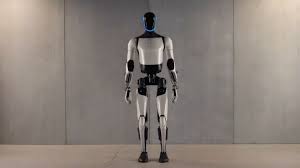
The introduction of affordable humanoid robots is no longer confined to sci-fi scripts. If Tesla successfully scales its supply chain to meet its target metrics, Optimus could spark a massive socioeconomic shift, redefining household labor, caregiving, and corporate manufacturing. While general consumers cannot yet place a deposit or join an official waitlist, the intense corporate race to put an autonomous assistant in every home is officially underway.